Why not, Why?
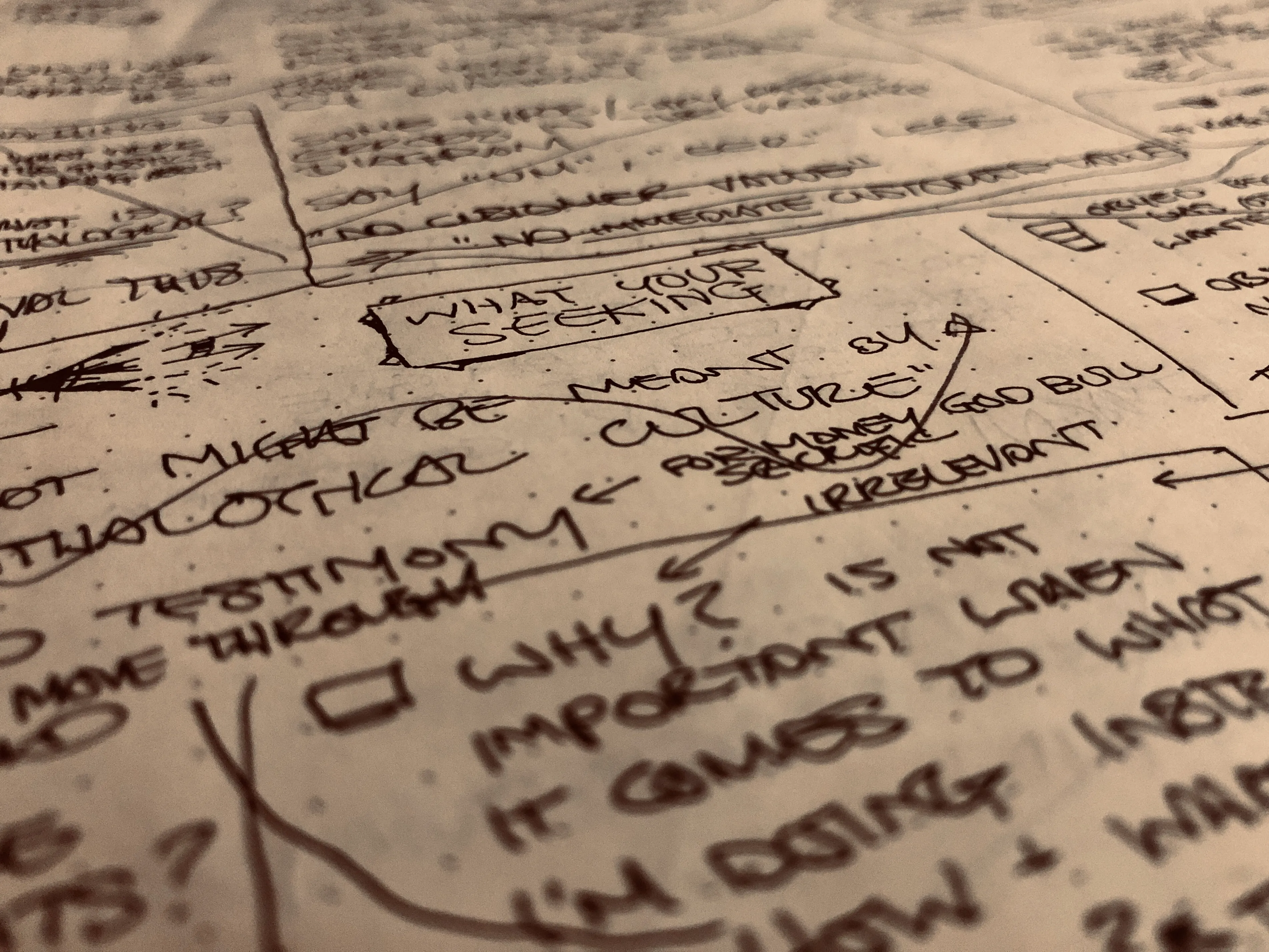
When reflecting, “Why” is often the wrong question to ask. “How” and “What” evoke different outcomes.
I plan to work on my mapping app but end-up, washing-up instead. Later I reflect, “Why didn’t I work on my app?”
This encourages an answer starting with “because” and tends to blame a single factor. With a system as complex as human behaviour, it is almost certainly a fool’s errand to expect a single factor. We got the results we got for a number of reasons.
“What” and “How” lead to specifics
How did we get from intending to do one thing and end-up doing another? Such a questions keep us more on track and may reveal something else that needs addressing – the real cause for the change of direction.
Here’s a taste of a more interesting paths of thought:
What are we seeking?
How did these events come about?
What was missing from our thinking, when we thought this would be how to get what we wanted?
It may feel like a lot more effort to answer these questions. That could be because they are less habitual. Taking these lesser-trodden paths is a necessary part of forming new habits.
No blame
This all reminds me of “blame free culture” – where you gather round with a team to understand how something went wrong, what happened that led to the event and what will have to change to prevent a similar issue arrising in future. People experienced in a blame-free-culture will see time spent defending past decisions as wasted time – better to stick to the hows and whats.
Keep it simple
At the start of this note we mention the fools errand of coming up with a single answer for why something happened. We saw this as unproductive. Later we drew a parallel between this and blame-free-culture. Both are examples of heading down unncessary rabbit holes. In terms of a software program, we can call this “redundant complexity”. Ultimately, we are running our program of self-reflection in order to develop better habits. We don’t need the rabbit holes so we cut them out. Now when we reflect, we might have to put in a bit more effort, to ask and answer unfamiliar questions and that effort will help us to refine our overall system of habits.
Further reflection
- What are the habits?
- Styles of avoidance
- Styles of doing things
In future, rather than asking why we did something that went against our plans, we can acknowledge, “We don’t like this.”
Then ask, “What do we want instead?”